Next of Kin
ZM
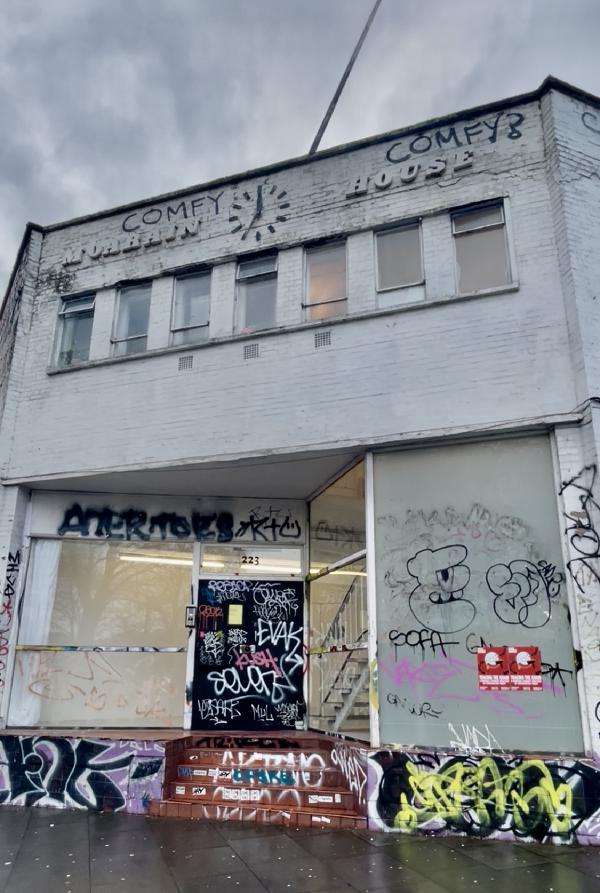
The windows in Rose Easton’s entrance are notoriously covered in graffiti. When you stand in the entrance, the light filters through the colourful skin all piecemeal, lighting you up like you’re in a kooky disco. I am walking up Cambridge Heath Road towards the gallery. I am in posession of a kind of anticipatory excitement. I have seen this show on instagram and I believe I will like it. I believe it’ll somehow negotiate the unspoken opaque matrix of interest enjoyment and association, and I’ll want to write about it. I am walking up to Rose Easton and the windows are different. I can see through them. They are clean!? Sparkling new, so see-through, I almost don’t believe they’re there.
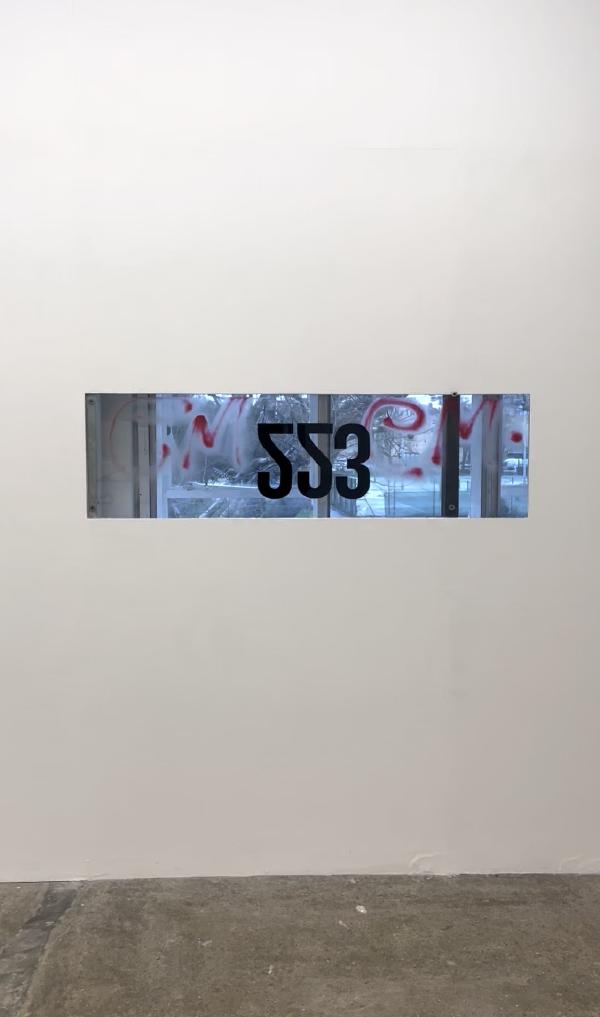
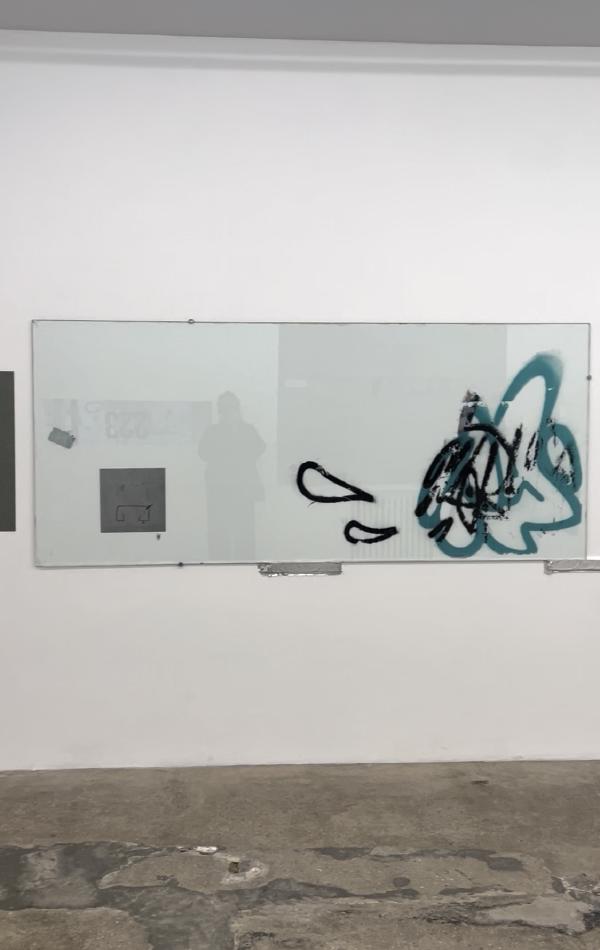
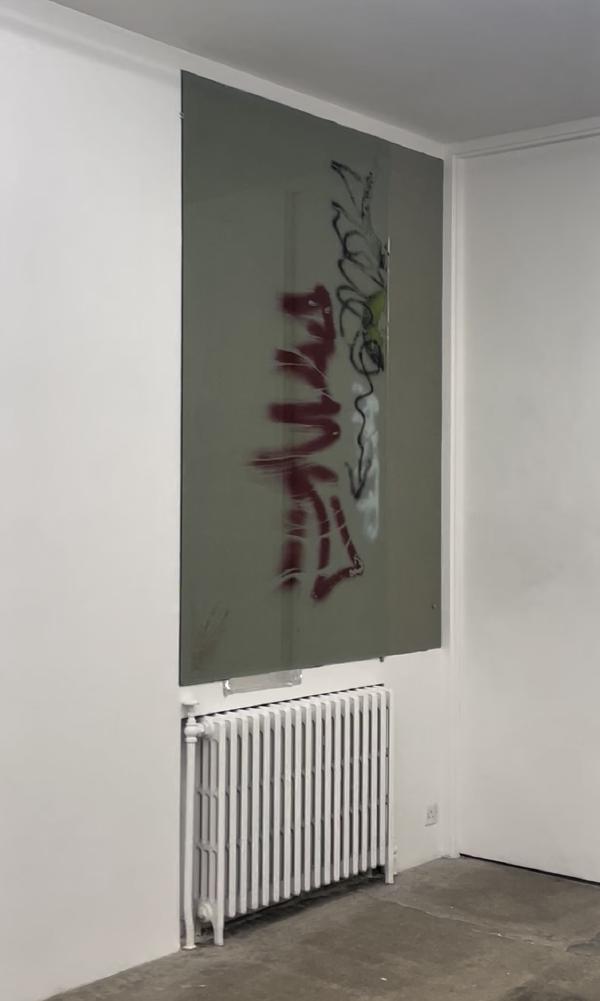
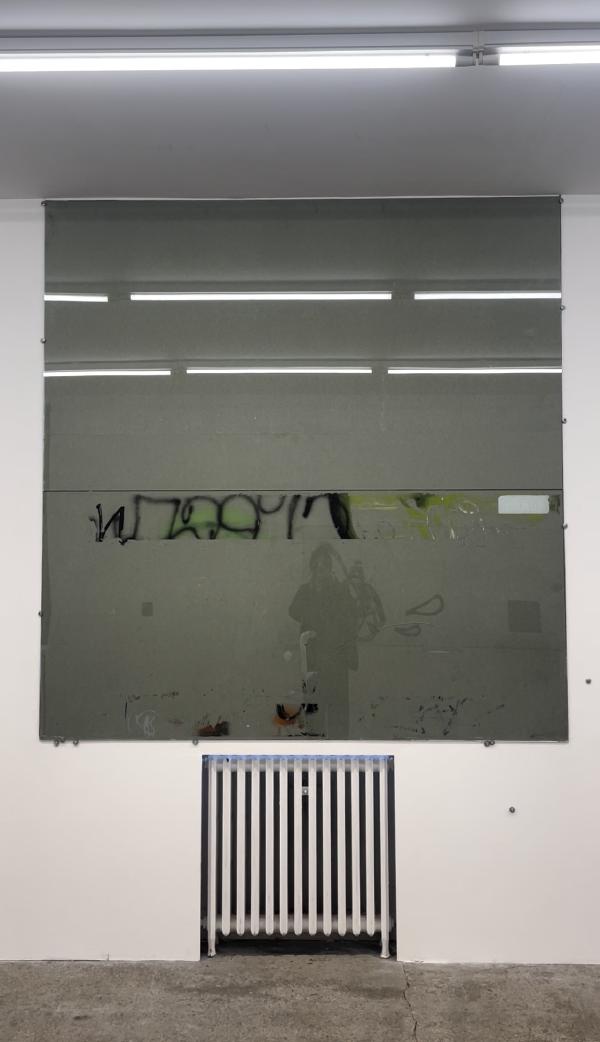
The artist, Beatriz Olabarrieta, has pinched the windows from the front of the building and put them inside the gallery. These original windows have been worked on: the artist has scrubbed away parts of the graffiti, cleaned and erased and made them new. Other parts are left in tact, isolated and emphasised. I understand the conceit at play: graffitied windows as a kind of found imagery, found painting.
The artist’s labour in erasing imagery is a kind of ultra-anti-painting. Anti-painting being: Fontana slashing the canvas, Malevich’s black square, Rothko and Newmann’s colour fields. Anti-painting as a refusal to create an image. Then, ultra-anti-painting as a refusal to make something that might be formally considered imagery, or the process of making imagery through acts of removal or processes of erasure.
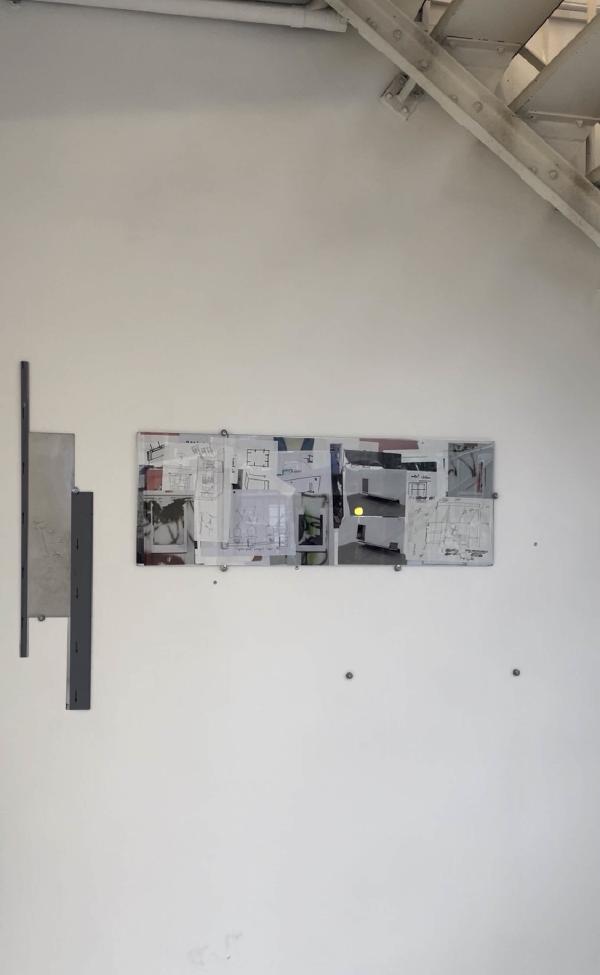
That and this infrastructural sleight of hand. The artist has sliced into the gallery walls and moved the windows around, fitting new ones. Engaging with the gallery like it is the fluid space of the painted-field, engaging with SITE in a specific way, and making paintings from what exists in our already chock-full world. YES!
It is rare to see something like this in a commercial gallery. The market is down and artworks are shop stock to be sold. Criticality is interesting (but its value is that it can enhance the price, on request, I imagine). I respect the cheek and bravado: to make something critical, conceptual, and (to my un-business-y mind) so unsellable.
I could end the review here but on Thursday evening, I was in a grand carpeted room at Chelsea College of Art, where curator and professor Paul Goodwin was delivering a lecture. He was speaking about curatorial approaches to dissident and fugitive Black art practices from the American Deep South. Yard art, made by ordinary Black Americans in the Deep South in and for their actual backyards. EG: A white plastic garden chair balanced precariously on a tyre, half dug down into the earth. Big X marks the spot crosses spray painted onto a wide array of sheet and stick timber.
A curator or gallerist might glance at this and call it FOUND OBJECT SCULPTURE! or NEO-CONCEPTUAL ASSEMBLAGE! but Paul Goodwin pointed out that many Yard art-makers are adamant that they are not artists — not in a self-effacing, humble way. Art is just a different category of thing. Paul Goodwin framed this as a conceptual refusal, anti-art dissidence, part of the critical strategy that makes this all FUGITIVE — it is running away from the lofty classification of Fine Art Object, trying to evade that specific kind of capture.
Paul Goodwin spoke about how Yard art, in its found-object-neo-conceptual-assemblage visual vernacular, represented a huge contribution to the canon of art history. This was Black Modernism, something that could sit in conversation with Duchamp’s Fountain. He pulled up images of quilts from Gee’s Bend, a remote community in rural Alabama. Black quiltmakers who use chunky abstract shapes and lurid colour. They were in conversation with the output of white abstract painters in 20th Century America. This was a Black art historical canon that ran parallel, that disrupted our understanding of what Modernism is!
He spoke about how he visited the Deep South and met people who make Yard art, spoke to them about the various ways curators and dealers have fucked them over: coming in to buy cheap, returning to the metropole to sell high. Then he spoke about curating a huge institutional show featuring Yard art.
It isn’t for me to decide what constitutes a parallel canon for Black Modernism. But a small voice in my head piped up, and said: FUGITIVE?????? If something is running away from a categorisation, shouldn’t we listen? Take that refusal seriously, rather than incorporate it into a meta-categorisation on the basis that ‘it has been running away! And that’s why it’s interesting’? For the canon of art history or for the market, they seem one and the same. In the grand lecture hall, I heard my colleague (Lucia Farinati) next to me whisper, ‘leave the Yard art in the yard’ — it refuses, so why don’t we come to it, rather than dragging it kicking and screaming into the gallery.
Graffiti is already a kind of fugitive practice. It runs away from the bourgeouis categorisation of Fine Art for Fine people. The people that tag buildings and walls and surfaces have their own answers about whether they’re artists or not, whether what they’re doing is an art form, whether they feel any type of way about the conceptual erasure when erasure is such an inevitable part of tagging a wall. Beatriz Olabarrieta has dragged them kicking and screaming into the white walled gallery and — sure, it’s a critical inversion of the conventions around authorship and production — but I don’t even know who the people doing the graffiti are to ask them about the terms of their potential refusal and what it means that their refusal has been denied.
I believed I would like this show: because it is critical and conceptual and cool — the holy trinity of the opaque unspoken matrix that dictates whether I write about something or not. It wears the language of its press release easily, it shouldn’t be (but it is) rare to see a commercial gallery take a commercial risk in showing work that puts criticality first and pulls a conceptual sleight of hand. I don’t want to punish that! I don’t want to spend my life writing about shop stock and The Market — London is being swallowed by the need for transaction, the need to stay afloat and it is killing the city in a slow, cruel way.
But isn’t that why you leave the Yard art in the yard? My interest is hamstrung by the feeling of looking at Rose Easton’s front door: seeing all the way through the windows, so sparkling new and clean that I almost don’t believe they’re there. The small voice in my head that measures and weighs the aura of artworks says we should let fugitives run home free and those windows have been used cheaply.
Beatriz Olabarrieta’s Next of Kin was on at Rose Easton until 28th Feb – if you want a look at the install pics, rather than my fuzzy iPhone pics, you can snoop around on the gallery’s website here