
Crit Club
Gabrielle de la Puente
It’s Saturday night and I’m sat in a bright sports hall in Ljubljana, the capital of Slovenia, watching two people fence. They’re going at it down an aisle of chairs set out like a catwalk. I don’t know anything about fencing. I didn’t know they were allowed to jump, but at one point, the white suit on my left flies up and brings the sword down, and the moment seems to last forever, like there are wires I can’t see. I like it. I like that I have walked into a medieval fight.
When everyone has finally taken their seat, the fencing stops. The boys take their helmets off to bow, and the person next to me gasps at the amount of sweat dripping down their faces. Wet, plastered hair, heavy breathing. I didn’t know it took that much out of the body. I like fencing even more now that I know the raging bodies inside those beekeeper suits still manage to be so precise.
We’re gathered in the sports hall for an event called Crit Club. A table has been placed where the fencers have just been, and four critics sit down, two either side. The idea is that each team must argue a topic set by the organiser, worded to be kind of unanswerable. After a stint, the critics physically switch sides on the table and argue the opposite point. There’s an audience vote before things get going and a second vote at the end to see if witnessing the debate has changed the audience’s mind at all.
Tonight’s topic: ‘Should art always look forward, never back?’ Its unfair counter argument: ‘Should art always look backwards, never forward?’ And they’re off, wearing football-style shirts, the whole audience leaning in, and I am ready to think things and examine myself and play the game along with them. But in the end, I am struck more than anything by how boring it is. It’s nothing like sport. It’s barely a debate, and I miss the drama I saw when I first came into the room.
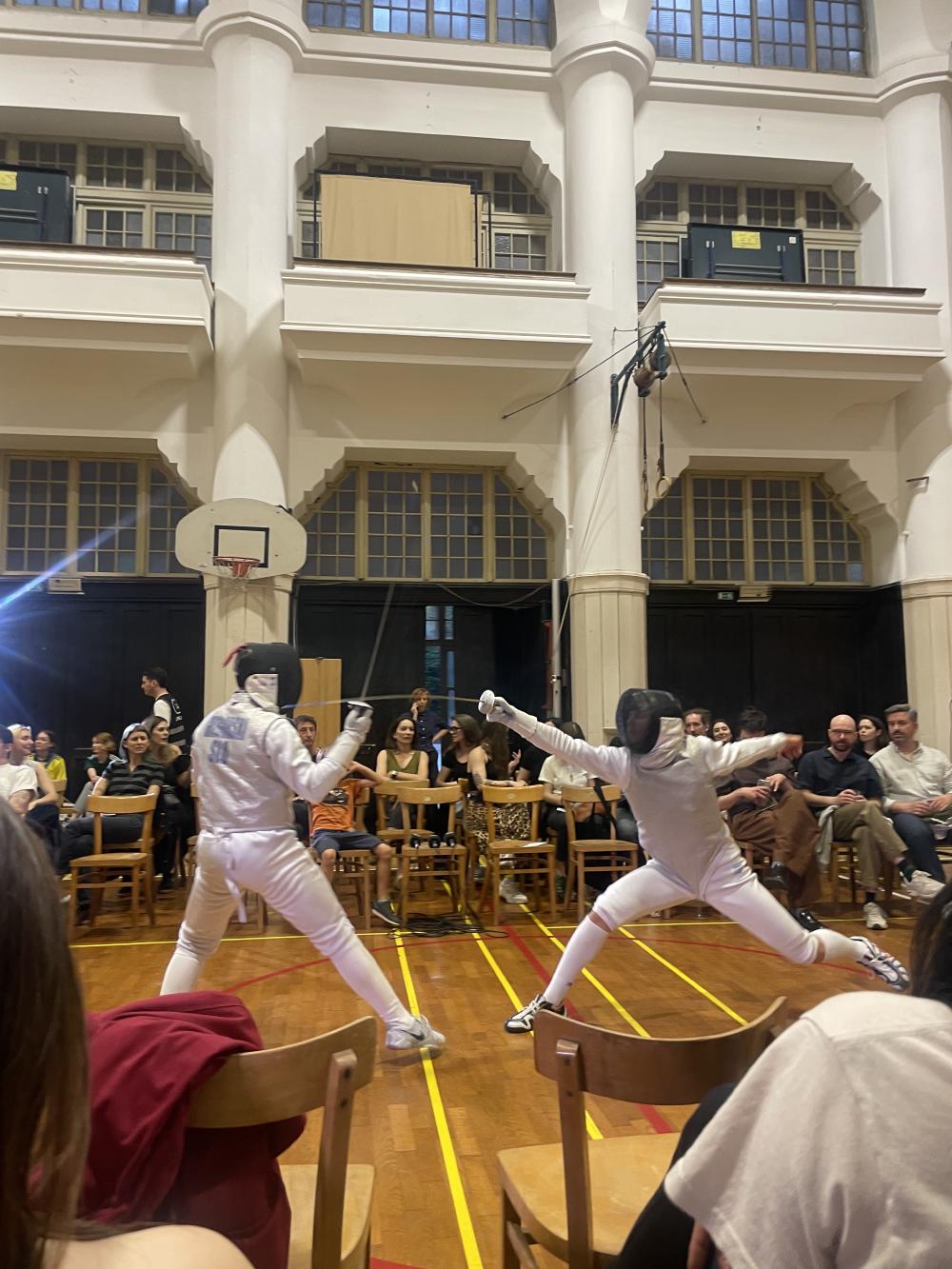
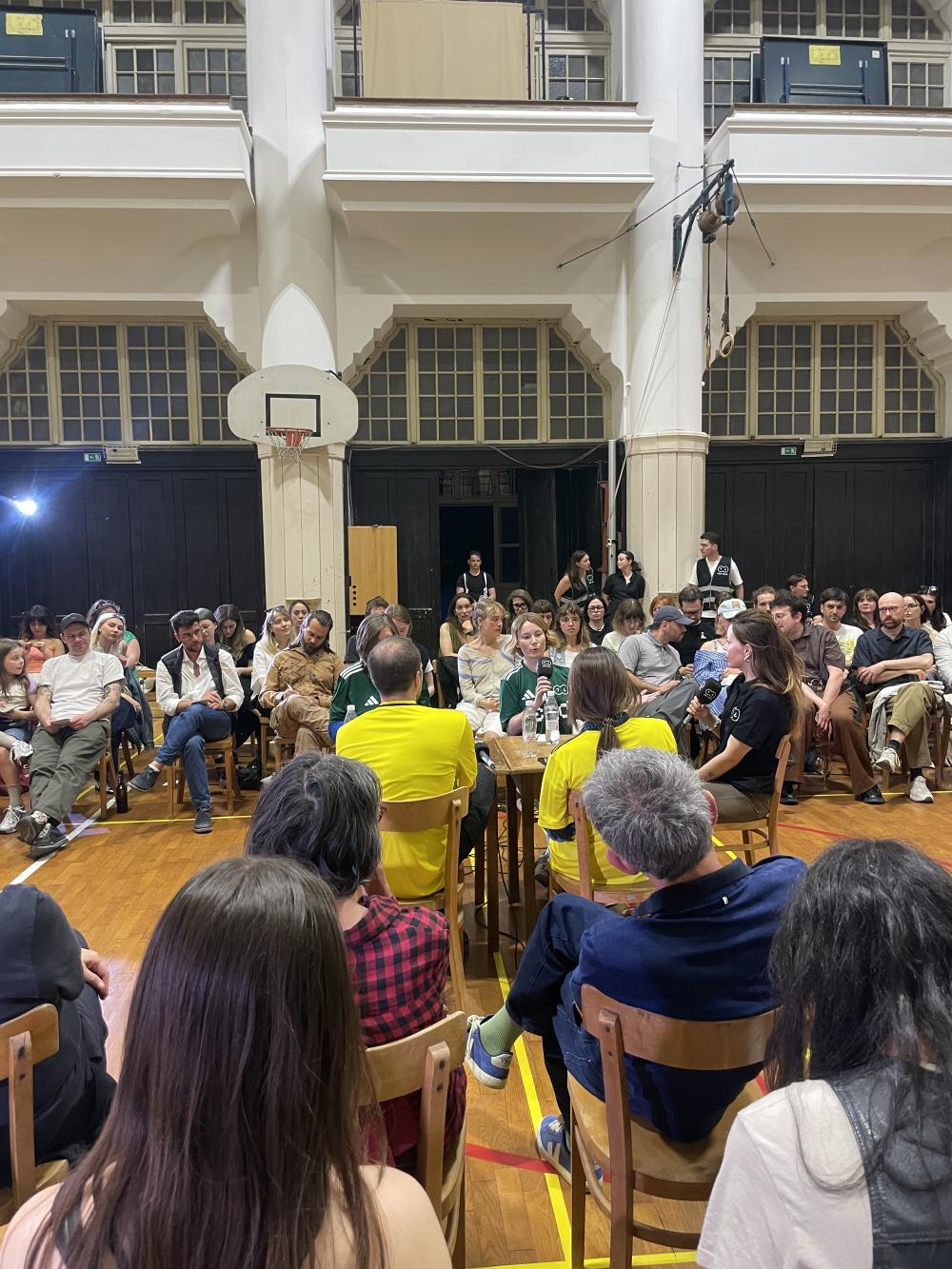
Crit Club ends up being four people talking in non-sequiturs, brief positions pulled from the notes they’ve each brought along with them. But the critics speak without responding to each other much, so it’s not quite a conversation. More like scrolling a twitter-like where each idea comes with a character limit; or hearing the opening lines of different essays in succession. No one is waiting for a gap to score. No one is climbing the basket ball hoop to attack from high. It’s like if the two fencers had stood either end of the hall and just done some poses.
It begins to feel even more pointless when we reach the half-way point and the critics switch sides and begin to contradict themselves, or invert their points from the first half to make parallel arguments. I think I would rather have spent an hour watching a panel talk, because at least I’d be hearing from people who really believe in what they’re saying. Tonight becomes less a debate and more the performance of a debate, which should probably make it more interesting but it just feels genuinely pointless. A thin, fake feeling over everything. An hour of time that didn’t really happen.
And when I speak to other audience members afterwards, everyone seems pissed off that they hadn’t just been resting at home after a long day at Ljubljana Art Weekend. One artist brought up Jubilee, the YouTube channel that pits different sides against one another for our modern viewing pleasure. 1 Journalist vs 20 Trump Supporters. 1 Atheist vs 25 Christians. She told me that Jubilee sell merchandise with the word ‘empathy’ on it. I know the channel but I’ve never made it through a full video because there’s something about the culture of capitalising on division that grosses me out.
This brings me to organiser Cem A. who runs meme account @freeze.magazine. We were on a panel together years ago talking about how memes mean different things in terms of humour and politics across the world. I told him that I wouldn’t use a wojack in my profile picture like he does on @freeze.magazine because, for me, it’s been contaminated by the far-right, and I wouldn’t want to attract the wrong audience. He was of the position that this stuff is there to be studied, mentioned meme scholars, and said it should all remain part of an ‘open conversation.’ I said again, that yeah, fine, but I still wouldn’t put it as my profile picture. I just went to check his account and I am still blocked to this day, so I don’t know how open that conversation really is.
I mention this because Crit Club feels like a natural product of Liberalism. Of fence-sitting. It suits someone who enjoys putting two hands in the air and theatrically shrugging because god, it’s so much easier to ask questions than it is to commit to a single answer. Devil’s advocate as praxis. That slipperiness. Let’s all do a thought experiment! No, really, please all come to my thought experiment. This thing kept happening where people left the event because the acoustics in the room were so bad, but there was a sad irony in that because with the unanswerable questions and flip-flopping critics, nothing was really being said anyway.
Crit Club had no stakes, and I left feeling weirdly bad for the critics. I dunno. I think the job of a critic is to seek resolution, or something close to one. I do not think that the job of a critic is to be the actor in a Liberal performance, doing mental gymnastics in a literal sports hall. And it’s like, I don’t need to watch Liberal art. If I bother thinking about it for even a second, I can play the whole thing out in my head. I would much rather have watched Cem A. attempt to answer the question himself, but it’s easier to invite critics to debate this stuff than produce criticism yourself.
I said earlier on that I was struck by how boring Crit Club was, but it’s not that I need debate to be packaged and made into merch and to be quick and bright and entertaining. I don’t know enough about fencing to know when someone is winning, so winning isn’t the point either. It’s just that when the two lads took their helmets off, it was obvious their effort was real.
🤺🤺🤺🤺🤺🤺🤺🤺🤺🤺🤺🤺🤺🤺🤺🤺🤺🤺🤺
-> please leave a 🤺 fencing emoji on our instagram so i know you were here
-> The critics in this performance were Manca G. Renko, Alenka Pirman, Andrej Škufca, Stephanie Bailey; and it was moderated by Kate Brown
-> and in case you missed it, i’ve started a new podcast called art dates : )